CO CITY

Concrete Repair & Epoxy Flooring in Evergreen, CO

Concrete Doctor has been repairing and protecting concrete throughout the Jefferson County foothills since 1994, and Evergreen properties are among the most demanding work we do. At roughly 7,000 feet in the Rocky Mountain foothills, driveways, patios, garage floors, and walkways here endure conditions that flatten concrete lifespans found at lower elevations. Our repair-first philosophy means we exhaust every resurfacing and coating option before recommending full replacement — saving Evergreen homeowners and business owners significant cost while delivering surfaces built for mountain conditions.
Concrete in Evergreen: What to Know

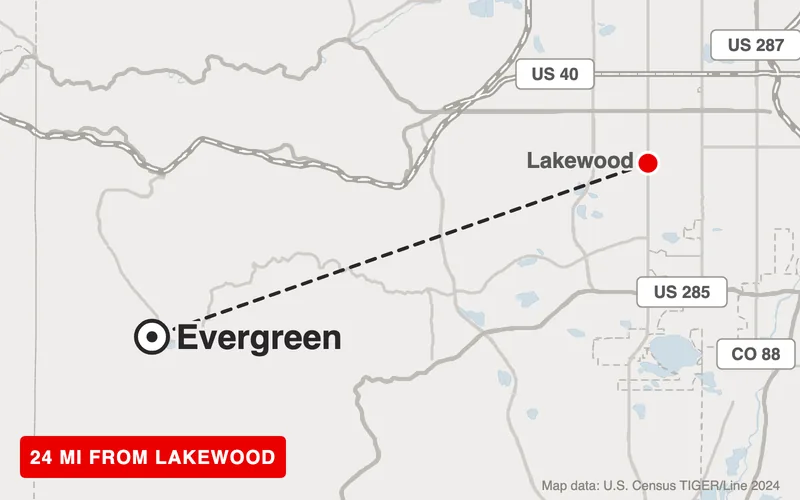
Evergreen sits in the Jefferson County foothills along Bear Creek, about 10 miles west of our Lakewood base. The community spans a wide range of property types — custom mountain homes on wooded lots, lakeside residences near Evergreen Lake, older ranch-style homes in established neighborhoods like Hiwan Hills and Soda Creek, and commercial properties along Highway 74 and Evergreen Parkway. Many driveways climb steep grades where water pools, freezes, and re-freezes repeatedly through the winter months. The climate here is genuinely brutal on concrete. Evergreen averages well over 100 freeze-thaw cycles annually, far more than Denver's lower-elevation neighborhoods. Every melt-refreeze cycle works moisture deeper into surface pores, then expands it — spalling, scaling, and cracking follow in a predictable sequence. The Front Range also uses magnesium chloride as the primary de-icing agent on roads and driveways, and mag chloride is chemically aggressive: it penetrates concrete at lower temperatures than rock salt and accelerates corrosion of rebar and wire mesh. Combine that with intense high-altitude UV that dries out and oxidizes unprotected slabs, and you have conditions that demand either high-quality protective coatings or regular re-sealing. The soils around Evergreen add another layer of complexity. Jefferson County's montane areas contain expansive clays — predominantly bentonite-rich profiles — that swell when saturated by spring snowmelt and contract during dry spells. That seasonal movement telegraphs directly into slabs, producing heave cracks, slab tilt, and joint failures that worsen each year if left unaddressed. Understanding this soil behavior is part of why thirty years of local work makes a real difference: we know which repair approaches hold in these conditions and which ones don't.

Why Evergreen Concrete Wears Out Faster Than You'd Expect

Homeowners who move to Evergreen from metro Denver are often surprised at how quickly concrete surfaces deteriorate compared to their previous homes. The altitude accounts for much of it — UV radiation at 7,000 feet is significantly more intense than at Denver's 5,280, accelerating the oxidation of cement paste and drying out unsealed surfaces faster than property owners anticipate. Concrete that looked fine going into October can emerge from March with fresh scaling and surface delamination. Freezing temperatures also arrive earlier and linger later in Evergreen than in the metro. A wet concrete patio that absorbs October rain can see its first freeze before the surface has fully dried, driving ice expansion into the slab before any protective measure has a chance to work. That initial damage then compounds — each subsequent winter makes the existing cracks wider and the surface layers more prone to pop-off. Catching problems at the hairline crack or surface-scaling stage is dramatically cheaper than waiting until full slab replacement becomes unavoidable. Our assessment process accounts for all of this. When we visit an Evergreen property, we evaluate subsurface conditions — not just what's visible on top — before recommending a repair path. A crack caused by soil heave requires different treatment than one caused by freeze-thaw cycling, even if they look identical from above.

Garage Floors, Driveways & Patios Built for Mountain Living

Attached garages in Evergreen mountain homes track in significant amounts of mag chloride-laden snowmelt every winter. That brine sits on the floor, works into any existing cracks or surface pores, and slowly destroys unprotected concrete from below. A properly applied epoxy or polyaspartic coating system creates a sealed barrier that stops that chemical penetration — but surface preparation matters enormously. We grind the floor to an open, mechanically bonded profile so the coating bonds to the concrete rather than to a weak surface layer that will delaminate under Colorado conditions. Driveways on Evergreen's steep wooded lots present a different set of challenges. Grade changes mean water flows across the slab surface rather than draining evenly, concentrating freeze-thaw damage at low points and along the edges where slabs meet landscaping. We assess drainage patterns as part of every driveway evaluation, because re-sloping or adding control joints is sometimes the smarter first step before any resurfacing work begins. Patios and outdoor living areas near Evergreen Lake or in the Soda Creek and El Pinal neighborhoods often sit on ground that shifts significantly between wet springs and dry summers. We use elastic polyurethane materials for joint and crack repair in these situations — they accommodate movement rather than fighting it, dramatically reducing the chance of the repair itself cracking within a season or two.

Serving Evergreen from Our Lakewood Base Since 1994

Concrete Doctor is a family-owned business based in Lakewood, and Evergreen is roughly ten miles up the mountain — a service area we know well after more than three decades of projects throughout the Jefferson County foothills. We schedule Evergreen jobs with realistic travel allowance and don't subcontract work to crews unfamiliar with mountain conditions. Every estimate is free and on-site. We look at the actual slab, probe existing cracks, check subsurface drainage, and give you a straight answer about whether repair, resurfacing, or replacement makes the most sense for your specific situation. For most Evergreen properties, repair and protective coating is the right answer — and often dramatically more cost-effective than pouring new concrete on expansive soils that haven't been properly engineered. Call us at (303) 988-2558 to schedule your free on-site estimate.

Frequently Asked Questions

Not when the repair is done correctly for mountain conditions. The key is using materials rated for high freeze-thaw cycling — elastic polyurethane for cracks and joints, properly formulated epoxy or polyaspartic systems for surface coatings — and ensuring thorough surface preparation before any product is applied. We've been repairing concrete in the Jefferson County foothills long enough to know which systems hold and which ones fail after the first hard winter.
Most cracked driveways we see in the Evergreen area are good candidates for crack repair plus resurfacing, rather than full replacement. The exception is when the slab has dropped or heaved significantly — indicating ongoing soil movement — or when spalling extends through more than about a third of the slab thickness. We evaluate both conditions during your free estimate and give you an honest recommendation either way.
Magnesium chloride penetrates concrete at temperatures as low as -13°F, making it more chemically aggressive than rock salt. It attacks the cement paste matrix and, in reinforced slabs, accelerates rebar corrosion that eventually causes spalling from below. Sealing your concrete — and resealing every few years — is a more practical solution than changing your de-icing habits, since mag chloride washes onto your slab from the road regardless. We can recommend the right sealer for your specific surface type.
If cracks recur in the same location, the underlying cause is almost always soil movement — expansive clays swelling with spring moisture, then contracting in summer dry spells. Rigid filler products simply crack again when the slab moves. We use elastic polyurethane crack and joint repair materials that flex with seasonal movement, which dramatically extends the life of the repair in Jefferson County's expansive soil conditions.
Application temperature matters significantly with concrete coatings. Most epoxy and polyaspartic systems require surface and ambient temperatures above 50°F for proper cure, which limits outdoor work in Evergreen's winters but typically allows garage work when the space is heated. We'll assess conditions during your estimate and schedule accordingly — in many cases, an attached garage with even minimal heat holds acceptable temperatures for coating application through much of the Colorado winter season.

Need Concrete Repair in Evergreen?

Get a free on-site estimate from Concrete Doctor — serving Evergreen, CO and the greater Denver metro since 1994.

Repair first. Replacement only when necessary.