CO CITY

Concrete Repair & Epoxy Flooring in Fort Collins, CO

Concrete Doctor has been restoring driveways, patios, garage floors, and commercial slabs across the Colorado Front Range since 1994, and Fort Collins is a community we know well. We're a family-owned Lakewood shop with a straightforward philosophy: repair first, replace only when there's no better option. When your Fort Collins concrete starts to show its age, give us a call before committing to a full tear-out.
Concrete in Fort Collins: What to Know

Fort Collins sits at roughly 5,000 feet elevation on the northern Front Range in Larimer County, where the Poudre River canyon meets the high plains. That geography creates a demanding environment for concrete. The city experiences 300-plus days of sunshine per year paired with hard winters — a combination that drives dozens of freeze-thaw cycles between October and April. Water works its way into hairline cracks, freezes, expands, and widens those cracks season after season. High-altitude UV radiation accelerates surface degradation faster than at lower elevations, drying out and bleaching sealers and coatings well ahead of their rated lifespans. The soils beneath Fort Collins add another layer of complexity. Much of Larimer County sits on expansive clay and bentonite formations that absorb moisture and swell, then shrink as they dry. That movement translates directly into heaving slabs, widening control joints, and step cracks at garage aprons and patio edges. Neighborhoods from Old Town's late-1800s and early-1900s cottages along Mountain Avenue to the mid-century ranch homes of the South College corridor and the newer subdivisions spreading toward Timnath carry very different concrete ages and conditions — but all share the same aggressive climate. Magnesium-chloride de-icer, heavily applied on I-25 and city streets each winter, adds a chemical attack on top of the physical freeze-thaw stress, eating away at surface paste and accelerating spalling. For homeowners and businesses in Fort Collins, proactive concrete repair is genuinely more economical than deferral. A crack sealed today costs a fraction of the resurfacing or panel replacement it becomes in two more winters. Concrete Doctor's repair-first approach means we assess every situation honestly, scope only what's necessary, and apply the right systems — elastic polyurethane joint repairs, Westcoat resurfacing overlays, high-performance epoxy and polyaspartic floor coatings — to match Fort Collins's specific conditions.

Why Fort Collins Concrete Deteriorates Faster Than You'd Expect

At 5,003 feet, Fort Collins sits high enough that UV intensity is meaningfully greater than at sea level — sealers and coatings that perform well in lower-elevation markets can fade, chalk, or delaminate in as little as two to three years here without the right formulation. Pair that with temperature swings that can move 50 degrees in a single day during spring and fall, and the thermal expansion and contraction on a concrete driveway or garage slab is relentless. Cracks that look cosmetic in October have often grown measurably by March. The Poudre River watershed also means that spring snowmelt and storm runoff can keep soils saturated for weeks at a stretch. Expansive clays beneath older neighborhoods like Old Town and Prospect Park absorb that water and push upward, creating the classic heaved sidewalk and uneven driveway panels that Fort Collins residents deal with repeatedly. Understanding the subsurface is part of how we diagnose whether a crack is stable or actively moving — and that distinction drives the repair approach entirely.

Residential Concrete Across Fort Collins Neighborhoods

The neighborhoods of Fort Collins tell the history of the city's growth in their concrete. Old Town homes near Jefferson Street and Mountain Avenue often have original walkways and detached garages from the 1920s and 1930s — concrete that has been patched over the decades but may need more than another skim coat at this point. The neighborhoods west of College Avenue toward the foothills, including Sheely Drive and Prospect areas, contain a heavy concentration of 1950s–1970s ranch homes where garage floors are showing their age through widespread surface scaling from decades of de-icer exposure and freeze-thaw cycling. Newer communities in southeast Fort Collins — areas near Fossil Creek, Harmony Road, and Ziegler — present a different challenge. These slabs are younger but were often poured during high-production construction cycles where curing conditions varied. We frequently see premature surface delamination, map cracking, and joint failures in 15-to-25-year-old concrete that, with proper surface preparation and a quality overlay or coating system, still has decades of useful life remaining.

Commercial & Industrial Concrete in the Fort Collins Area

The Fort Collins commercial corridor along College Avenue, Harmony Road, and the East Mulberry Street industrial area presents high-traffic concrete that takes a beating from delivery vehicles, forklifts, and the constant temperature cycling of large warehouse doors. CSU's campus presence means the city also has a large institutional inventory of concrete walkways, plazas, and parking structures that require ongoing maintenance. For commercial clients in Fort Collins, Concrete Doctor offers the same repair-first assessment we apply to residential work. We can address joint failures, spalled warehouse floors, and deteriorated loading dock approaches with professional-grade systems matched to traffic loads and use conditions. When a business can extend the life of a concrete floor by ten years with a coating or resurfacing rather than full replacement, that's a significant budget win — and our team understands how to scope and deliver that outcome reliably.

Frequently Asked Questions

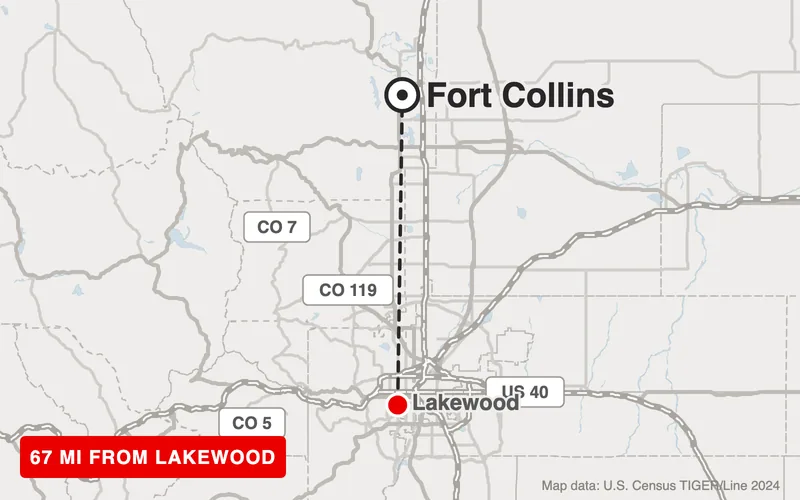
Yes — Fort Collins is a regular part of our service area. The drive up I-25 from Lakewood is about 57 miles, and we work in the northern Front Range communities regularly. We schedule Fort Collins estimates and project days efficiently so there's no premium for the distance.
Not necessarily. Heaving caused by expansive clay soils is common throughout Larimer County, and in many cases the panels themselves are structurally sound — they've just moved. Depending on the severity and stability of the underlying soil, we can address surface damage with a resurfacing overlay and manage the joint system with elastic repair materials. We'll give you an honest assessment on-site rather than defaulting to the more expensive option.
Fort Collins typically sees 30 to 50 freeze-thaw cycles per winter season, concentrated between November and March. That's significantly more than many lower-elevation Front Range cities, and it's the primary driver of concrete spalling, surface scaling, and crack propagation we see across the city.
Late spring through early fall — roughly May through September — gives us the ideal temperature window for curing overlays, coatings, and sealers properly. That said, we can perform many crack and joint repairs in cooler shoulder-season conditions. We'll let you know upfront if a job needs to wait for better temperatures.
Yes, and we recommend it for any surface that gets regular winter traffic. A quality penetrating sealer or surface-applied coating creates a barrier that dramatically reduces the damage magnesium chloride causes to the cement paste. We'll select the right sealer type — penetrating, film-forming, or decorative — based on the surface condition and your long-term goals.

Need Concrete Repair in Fort Collins?

Get a free on-site estimate from Concrete Doctor — serving Fort Collins, CO and the greater Denver metro since 1994.

Repair first. Replacement only when necessary.