CO CITY

Concrete Repair & Epoxy Flooring in Fraser, CO

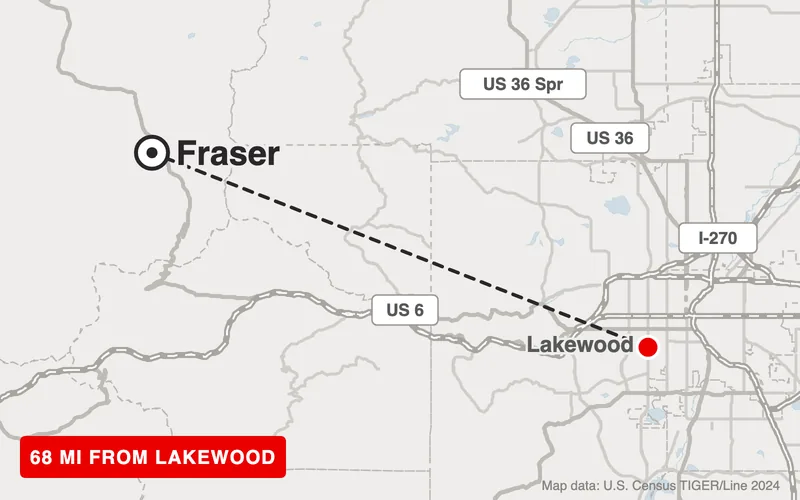
Concrete Doctor has been repairing and refinishing concrete for Colorado homeowners and businesses since 1994, and we bring that same repair-first philosophy to Fraser and the surrounding Grand County communities. Whether your garage slab took a beating over another brutal mountain winter or your driveway is cracking from frost heave and clay-soil movement, our goal is always to save the existing concrete rather than tear it out. We serve Fraser from our Lakewood base — roughly 34 miles away — because mountain communities deserve contractors who understand high-altitude concrete realities.

Concrete in Fraser: What to Know

Fraser sits at about 8,550 feet in Grand County, tucked in a valley where the Fraser River and Williams Fork River converge before flowing into the Colorado River. The town is flanked by the Arapaho National Forest and sits in one of the coldest valleys in the continental United States — Winter Park Resort is just a few miles up the road, and the area's reputation for extreme cold snaps is well-earned. That climate translates directly into concrete stress: the freeze-thaw cycle in Fraser doesn't just happen a handful of times a season like it does at lower elevations. At high altitude, temperatures can swing through the freeze point dozens of times across late fall, winter, and spring, and each cycle forces water deeper into concrete pores, expanding and contracting the slab from within. Over a few seasons, even well-placed concrete develops scaling, spalling, and surface delamination. Fraser's soil adds another layer of complexity. Grand County has pockets of expansive bentonite clay that respond dramatically to moisture changes — swelling when wet from snowmelt and shrinking when dry. That seasonal heave-and-settle cycle puts relentless lateral stress on slabs, foundations, and flatwork. Homes in the Fraser Valley range from older ranch-era cabins with decades-old slabs to newer mountain retreats and second-home properties that may sit unheated for stretches of winter, making freeze-thaw damage inside unheated garages and basements particularly severe. Commercial properties along US Highway 40 and in the Fraser Valley industrial corridor face heavy truck traffic and road salt tracked in from heavily de-iced mountain roads. Magnesium chloride — the de-icer Colorado DOT applies heavily on I-70 and mountain US routes — is aggressive toward concrete surfaces. Vehicles driving through Fraser carry it on their tires and undercarriages into garages and onto driveways, where it accelerates surface scaling and rebar corrosion. High-altitude UV radiation compounds the damage on exterior slabs: the thinner atmosphere at 8,500 feet lets more ultraviolet light reach unprotected concrete and coatings, fading and breaking down materials faster than at Denver's elevation. Understanding all of these stressors together — not just one in isolation — is what separates a durable repair from one that fails by the next thaw.

Why Fraser's Mountain Climate Is Hard on Concrete

At 8,550 feet, Fraser experiences some of the most punishing freeze-thaw cycling in Colorado. Unlike Denver where freezing nights are occasional, Fraser can cycle through the freezing point repeatedly in a single week during shoulder seasons. Each cycle drives water deeper into microscopic pores, and as that water expands on freezing, it fractures the concrete matrix from the inside out. The result — surface scaling, pop-outs, and widening cracks — shows up faster here than almost anywhere else in the state. The intensity of high-altitude UV radiation is a factor most property owners don't consider until a coating or sealer fails prematurely. At Fraser's elevation, UV index readings are significantly higher than at sea level, and unprotected concrete surfaces and floor coatings degrade faster without UV-stable top coats. Concrete Doctor uses UV-resistant polyaspartic and polyurethane finishes that are engineered for exactly this kind of exposure, keeping floors and exterior slabs looking and performing well through years of mountain seasons. Magnesium chloride road treatment adds chemical attack to the physical stress. Vehicles arriving from US Highway 40 or County Road 72 carry de-icer residue that pools on garage floors and driveways, slowly eating into the cement paste and exposing aggregate. Sealing and coating concrete before the damage becomes deep is always less costly than resurfacing after the surface has degraded — which is why we emphasize proactive sealing for Fraser properties alongside repair work.

Expansive Soils and Slab Movement in the Fraser Valley

Grand County's geology includes bentonite-bearing clay formations that expand when absorbing snowmelt and contract sharply during dry periods. For any concrete slab sitting on or near these soils, that movement is transmitted directly upward as heave stress. Driveways crack along diagonal fault lines, garage slabs develop step cracks at control joints, and patio sections tilt away from structures as the soil beneath them shifts across the seasons. The repair-first approach we've practiced since 1994 is especially valuable in this environment. Rather than recommending wholesale replacement every time a slab shows cracking, we evaluate whether the underlying movement has stabilized and whether the existing concrete is still structurally sound enough to resurface or reinforce. In many cases, routing and sealing cracks with elastic polyurethane filler — a material that can flex with ongoing minor movement — extends the life of a Fraser-area slab by many years without the disruption and cost of full removal. When soil movement has been severe enough to create significant differential settlement, we assess the full picture before recommending a path. Sometimes mudjacking or strategic void filling is a prerequisite to a lasting surface repair. Our goal is always to give Fraser property owners an honest evaluation of what their concrete actually needs — not an upsell to replacement work that isn't necessary.

Services We Bring to Fraser and Grand County

From crack repair and joint sealing on older driveways to full epoxy and quartz floor systems in commercial spaces along the Highway 40 corridor, Concrete Doctor offers the full range of concrete services that Fraser properties need. Garage floor coatings are among the most requested services in mountain communities: an unprotected slab absorbs de-icing chemicals, oil, and moisture year after year, but a properly prepared and coated floor becomes impervious to those threats. We offer epoxy base coats with quartz broadcast, metallic systems, and polyaspartic top coats that cure quickly even in cooler mountain temperatures. Exterior work — driveway repair, patio resurfacing, pool deck refinishing — gets particular attention to material selection given Fraser's UV exposure and freeze-thaw intensity. We use Westcoat-system products chosen specifically for Colorado mountain conditions: breathable sealers that let vapor escape without blistering, flexible crack fillers that move with the substrate, and finish systems that hold color under intense UV. Stamped and decorative concrete repairs are handled with color-matching precision so patches blend seamlessly rather than advertising themselves. If you're not sure whether your Fraser concrete needs repair, resurfacing, or replacement, a free on-site estimate is the right starting point. Call us at (303) 988-2558 and we'll come out, assess the full condition of your flatwork, and give you a straightforward recommendation with no pressure attached.
Frequently Asked Questions

Yes — Fraser is about 34 miles from our Lakewood base and well within our service area for Grand County. We regularly work in mountain communities along the I-70 and US-40 corridor. For larger jobs we coordinate scheduling to make the most of each trip, and for smaller evaluations we can often combine visits in the area.
Elevation plays a big role. At roughly 8,550 feet, Fraser experiences far more freeze-thaw cycles per season than Denver or the Front Range. Every cycle expands water inside concrete pores and stresses the slab. Add expansive clay soils that heave and settle with moisture, and you have two independent crack-driving forces working on the same slab. Proper crack routing, flexible filler, and a quality sealer can dramatically slow that damage cycle.
They can, provided the right products are selected and the slab is properly prepared. Moisture vapor transmission through cold slabs is a real concern — we perform moisture testing before applying any coating and choose systems that accommodate the conditions we find. Polyaspartic top coats are particularly well-suited to temperature extremes because they remain flexible and don't become brittle in the cold the way some older epoxy formulas do.
The honest answer depends on the structural condition of the slab and whether any underlying soil movement has stabilized. Surface scaling, moderate cracking, and cosmetic deterioration are almost always repairable. Slabs that have shattered, heaved severely, or lost structural integrity may need replacement. We evaluate both options at every free estimate — and our business is built on repair, so we're not going to recommend demolition unless the concrete genuinely warrants it.
Summer is the most reliable window — June through early September gives you the warmest temperatures and lowest precipitation risk. We can work in late spring or early fall with appropriate precautions, but coatings and sealers need surface temperatures above manufacturer minimums to cure properly. We'll advise on timing during your estimate based on the specific work involved.

Need Concrete Repair in Fraser?

Get a free on-site estimate from Concrete Doctor — serving Fraser, CO and the greater Denver metro since 1994.

Repair first. Replacement only when necessary.