CO CITY
Concrete Repair & Epoxy Flooring in Mead, CO
Concrete Doctor has been repairing driveways, garage floors, patios, and commercial slabs across the Denver metro and Colorado Front Range since 1994 — and we serve Mead homeowners and businesses with the same repair-first approach that has kept us in business for three decades. When your concrete is cracked, spalling, or deteriorating, replacement is rarely the right first move. We assess what's actually going on and fix it properly. The Concrete Doctor crew make the drive up to Weld County regularly, and we know what the northern Front Range puts concrete through.
Our Services in Mead
✨Epoxy & Quartz Flooring🚗Garage Floor Coatings🏠Basement Floor Coatings🏭Commercial & Warehouse Epoxy Flooring🎨Metallic & Flake Floors🩹Crack & Joint Repair🖌️Concrete Resurfacing🛡️Concrete Sealing💎Concrete Polishing⚙️Concrete Grinding & Cutting🧱New Concrete Pour & Replacement🏛️Stamped & Decorative Concrete🛣️Driveway Repair & Resurfacing🪑Patio Repair & Resurfacing🏊Pool Deck Repair & Resurfacing🚶Steps, Walkways & Sidewalks
Concrete in Mead: What to Know
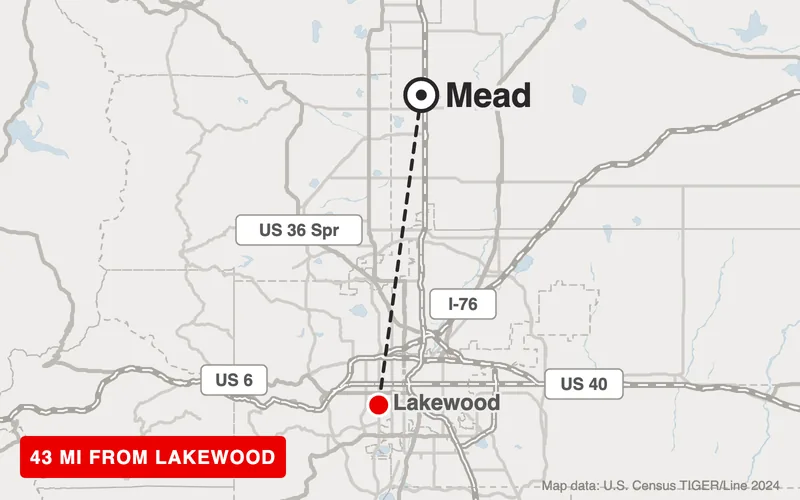
Mead sits in northern Weld County on the plains just east of the foothills, roughly 35 miles north of our Lakewood home base. The community has grown steadily over the last two decades, which means a wide range of property vintages — older ranch-style homes with original driveways that have absorbed decades of Weld County winters, and newer subdivisions whose concrete is only now starting to reveal how the underlying expansive soils behave after a few seasons of wetting and drying. Either way, the concrete has earned every crack it shows.
Weld County sits on some of Colorado's heaviest bentonite-rich expansive clay soils. When moisture levels shift — spring snowmelt, summer storms, and then the long dry stretches in between — the ground beneath your slab contracts and expands dramatically. That cycle pushes slabs up, pulls them apart, and undermines the base under driveways and garage aprons. Add in the northern Front Range's intense high-altitude UV, which breaks down surface paste and accelerates surface scaling, and you get concrete that ages faster than it would in a gentler climate. Winter brings additional stress: Weld County roads get magnesium-chloride treatments for ice control, and that salt migrates onto residential concrete wherever plows and tires carry it, attacking the surface and widening cracks over successive freeze-thaw cycles.
For Mead properties, maintaining concrete is genuinely practical — a sealed, repaired driveway or garage floor is far cheaper than replacement, and a properly coated garage floor handles the mud, snow melt, and road salt that come in off I-25 or County Road 13 every winter. We work with homeowners in established neighborhoods off Main Street as well as newer builds in subdivisions along the Mead corridor, and we bring the same Westcoat coating expertise and elastic repair systems to every job.
What Weld County Soils Do to Mead Concrete
The bentonite-rich clay soils underlying much of Weld County are among the most active in Colorado. They absorb water and expand — sometimes dramatically — then shrink back as they dry out. Slabs poured directly on uncompensated clay bases are the ones we see most often in Mead: the slab heaves in one section, settles in another, and the result is diagonal cracking at corners, longitudinal cracks through the middle of driveways, and pop-outs along control joints that were never filled properly. These are repairable problems. Left alone, they become replacement-level problems.
Our approach starts with an honest assessment of what is driving the movement. If the subgrade is still shifting actively, a surface patch will not hold. We use elastic polyurethane products for crack and joint repairs specifically because they remain flexible after cure — they can accommodate the minor seasonal movement that Weld County soils produce without reflective cracking. For larger structural concerns, we walk you through the options clearly before any work begins.
For driveways and garage aprons, resurfacing with a bonded overlay extends the life of a slab that has surface wear but sound structure underneath. We do not oversell full replacement when resurfacing will accomplish what the homeowner actually needs.
Colorado's Climate Is Genuinely Hard on Concrete — Especially This Far North
Mead sits at roughly 4,900 feet of elevation, and the northern Front Range gets a different brand of winter than Denver proper does. Temperature swings through October, November, and March are severe — overnight lows regularly dip below freezing while afternoon highs push concrete surfaces through expansion and contraction cycles that would take years to accumulate in a milder climate. Water that enters a crack in the morning can freeze by evening and wedge the crack wider. That process repeats dozens of times per season.
High-altitude UV compounds the damage. At Mead's elevation, concrete surfaces receive significantly more ultraviolet radiation than they would at sea level. UV degrades the surface paste that protects the aggregate underneath, leaving surfaces chalky, porous, and more vulnerable to freeze-thaw damage and de-icer penetration. A penetrating concrete sealer applied at the right time dramatically slows this process — and it is far less expensive than addressing the downstream spalling that results from neglect.
We time sealing and coating work to Mead's actual climate calendar, not a generic schedule. Application temperatures matter for product performance, and we do not cut corners by applying coatings outside their rated temperature windows.
Garage Floors, Driveways, and Patios: Mead's Most Common Repair and Coating Needs
Garages in Mead take a particular beating. Vehicles track in magnesium chloride from Colorado 66, I-25, and the county roads all winter long, and that salt dissolves in snowmelt and sits on the concrete slab. Over time it causes surface delamination, pitting, and the dusty, flaking surface that most people write off as 'just old concrete.' An epoxy or polyaspartic coating seals out moisture and salt before the damage compounds — and it makes the floor dramatically easier to clean.
Driveways in older sections of Mead often have original concrete that has handled twenty-plus winters without any protective treatment. Control joint cracks are common, and the driveway apron at the street is usually the worst section, where snowplow impact and repeated freeze-thaw stress combine. Resurfacing or targeted crack repair with joint filling can add years of service life to these slabs. On newer construction, we often see shrinkage cracking in the first few seasons as slabs cure — getting those cracks sealed early prevents water infiltration and keeps minor cracking from becoming major.
Patios and outdoor entertainment areas face similar stresses, with the added challenge of direct sun exposure all summer. Concrete Doctor's resurfacing and sealing services keep Mead patios functional and looking sharp without the cost and disruption of full removal and replacement. Call us at (303) 988-2558 to schedule a free on-site look — we will tell you exactly what the slab needs.
Frequently Asked Questions
We serve Mead directly — it is about 35 miles from our Lakewood base, and we make that run regularly for jobs in Weld County. You will work with the same Concrete Doctor crew that handles work closer to Denver, not a subcontractor. Call (303) 988-2558 to schedule.
Waiting tends to make it worse. Water infiltrating open cracks accelerates the heave-and-settle cycle in Weld County's expansive clay soils. We use elastic polyurethane repair materials that stay flexible through seasonal movement, which means repairs hold even when there is minor ongoing soil activity. We will assess whether the movement is stabilizing or still active before recommending a course of action.
A properly prepared and applied polyaspartic or epoxy system typically lasts ten years or more under normal residential use. The critical factor is surface preparation — grinding to open the concrete profile so the coating bonds mechanically, not just chemically. We do not apply coatings over dusty or lightly acid-etched surfaces; that is where premature failures come from. Our Westcoat systems are formulated for Colorado conditions.
Surface scaling — where the top layer flakes off in thin sheets — is very common on Colorado concrete that has been exposed to freeze-thaw cycles and de-icers without a sealer. As long as the slab is structurally sound (not hollow underneath, not severely cracked through), resurfacing with a bonded overlay can restore it completely. We will check the slab before quoting anything.
Late spring through early fall — roughly May through September — gives the best conditions for most sealing and coating work. Concrete needs to be fully dry, and ambient temperatures need to stay within the product's application window, which rules out the shoulder seasons when overnight freezes are still happening. We can walk you through timing based on your specific project when you call for an estimate.
Need Concrete Repair in Mead?
Get a free on-site estimate from Concrete Doctor — serving Mead, CO and the greater Denver metro since 1994.
Repair first. Replacement only when necessary.