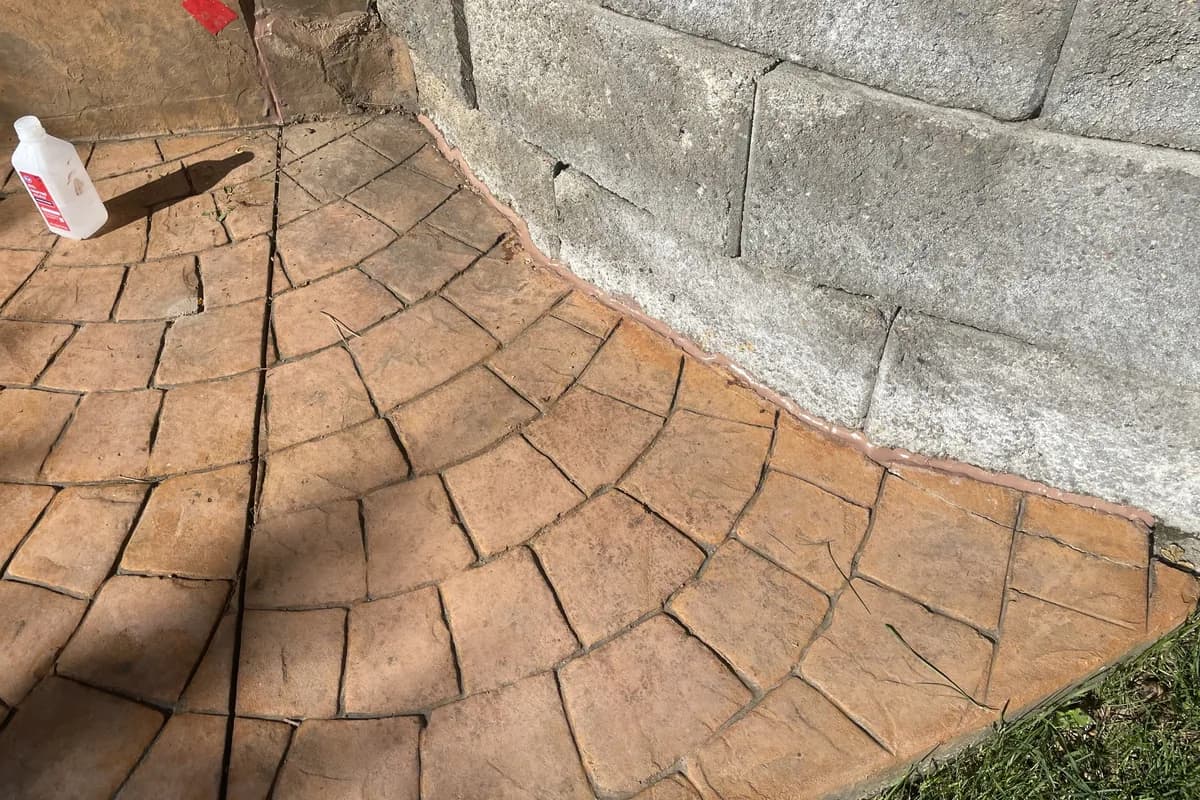
Homeowners ask us all the time whether they should stain, paint, or coat a concrete surface. The three approaches can look similar in a photo, but they bond to concrete in different ways, and that difference is what decides whether the result lasts one season or many.
Paint Sits on Top, and That's the Problem
Paint is a film. It doesn't react with the concrete or soak into it, it relies on mechanical grip to the surface texture to stay put. That works fine indoors, where temperature and moisture stay fairly steady.
Outdoors on a Front Range driveway or patio, paint has a harder job. Concrete is porous, and moisture vapor moves up through a slab from the ground underneath it. Freeze-thaw cycles push and pull at anything sitting on the surface all winter. Over a season or two, that combination works its way under the paint film, and it starts to lift, bubble, and flake, usually first at expansion joints and low spots where water sits longest.
Concrete-rated paint holds up better than ordinary wall paint, but it's still a film on top of the slab. Even with careful cleaning and etching before application, the bond stays mechanical rather than chemical, so proper prep buys time, it doesn't change the fundamental problem. On an exposed exterior surface in this climate, it's rarely a long-term answer.
Acid Stain vs. Water-Based Stain
Acid stain isn't a color you apply, it's a chemical reaction. The acid reacts with lime in the cured concrete and etches color into the surface permanently. Because it becomes part of the slab instead of sitting on it, it can't peel the way paint does. The tradeoff is a limited, mottled palette of earth tones, tans, browns, and soft greens, and the result varies from slab to slab depending on the concrete's own chemistry, its age, and how it was originally finished.
Water-based stain works differently. It's a pigment carried in a penetrating solution, so it soaks into the surface pores instead of etching them chemically. That gives a much wider color range, more even and predictable coverage, and the option to layer colors for depth. It sits a little shallower in the concrete than acid stain, which is part of why the sealer over it matters so much.
Both stains need a clean, open surface to take evenly. Old sealer, paint, oil stains, or a dense trowel finish can all block penetration and leave blotchy results, which is why we test a small area first on any slab we haven't worked on before. Neither stain adds real wear protection on its own. That comes from what goes over it.
Where a Coating Beats Both
For a garage, shop floor, or basement that takes real traffic, a coating system does more work than either paint or stain. Epoxy, polyaspartic, and polyurea coatings are thicker, tougher film systems, and the prep is what makes them hold. Before we coat anything, we grind the slab to open the surface and give the coating something to mechanically key into, then the coating cures into a hard, bonded layer instead of just sitting loose on top like paint.
The topcoat you choose changes how the floor performs, too. Epoxy builds a hard, high-build film but cures more slowly and is more sensitive to UV. Polyaspartic and polyurea topcoats cure much faster, often letting a floor return to light use sooner, and they hold their color and clarity better under UV exposure. That's part of why a lot of garage systems pair an epoxy base coat with a polyaspartic topcoat.
That's the real difference from paint: prep plus chemistry, versus color alone. A properly prepped coating resists hot tire pickup, de-icer chemicals, and abrasion in a way a can of concrete paint never will. Our garage floor coatings and epoxy and quartz flooring pages cover the systems we install and why prep matters as much as the topcoat.
Sealing Is What Protects the Color
Whichever route you choose for color, staining, dyeing, or a decorative treatment like stamped and decorative concrete, the sealer on top is doing the actual protecting. Stain gives you color. Sealer gives you resistance to stains, moisture, and UV.
Colorado's strong UV exposure breaks sealers down faster than at lower elevations, so a sealer that lasts several years elsewhere may need refreshing sooner here. Check your sealer's sheen and water beading every year or two, and recoat before it wears through rather than after the color underneath starts to fade. Our concrete sealing page covers how we match sealers to the surface and the exposure it deals with.
Not Sure Which Option Fits Your Slab
Every slab is different, and the right approach depends on its condition, what it's exposed to, and how it gets used. If you want a straight opinion on whether stain, paint, or a full coating system fits your project, call us at (303) 988-2558 or request a free on-site estimate and we'll walk the surface with you in person.