A bare concrete garage floor in Colorado takes a beating every winter. Snowmelt loaded with magnesium chloride drips off the car for weeks at a time, tracked in from every road and parking lot the tires touched. By spring the slab is stained, pitted, or starting to spall, and most homeowners assume that's just what garage floors do here. A properly installed coating system protects against that whole cycle instead of just hiding it under a coat of paint that will peel within a year or two.
What Snowmelt and De-Icers Do to a Bare Slab
Magnesium chloride is the de-icer most Front Range cities and CDOT use on roads, and it rides home on every tire and boot all winter long, dripping off as snow and ice melt in a warm garage. On bare concrete, repeated exposure accelerates surface scaling and can attack the cement paste at the top of the slab over several seasons of exposure. Combine that with freeze-thaw cycling, where water that's worked its way into the concrete's pores freezes and expands dozens of times over a single winter, and a bare garage floor slowly deteriorates even though it never sees a flake of direct snow.
A coating system seals that surface off completely, so the chlorides and moisture stay on top of the film where they can be swept or mopped away instead of soaking into the slab and doing damage you won't notice until spring. Over enough winters, an unprotected slab can also develop a chalky, dusting surface as the top layer of paste breaks down, which is a sign the concrete has been absorbing more than it should for years.
Hot Tire Pickup and Why Prep Matters More
Hot tire pickup happens when tires that have heated up driving on summer asphalt roll into the garage and soften a coating that hasn't fully cured or wasn't rated for that kind of heat, pulling the film up in small patches right where you park. It's an avoidable problem. It comes down to letting a coating reach its full cure before putting it into regular use, and choosing a topcoat that's actually built for tire traffic rather than a basic paint-grade product.
The bigger factor in long-term durability, though, is what happens before any coating goes down at all. Grinding opens up the surface of the slab so the coating mechanically bonds into it instead of just sitting on top like a coat of paint. Skipping that step, or coating directly over old paint or a failed sealer, is the single most common reason a garage floor coating fails within the first year or two.
Epoxy vs. Polyaspartic Topcoats
Epoxy is the workhorse base coat in most systems. It's thick, builds a durable film, and bonds well to properly prepped concrete, which is why it's been the standard for decades. On its own, though, epoxy can amber or yellow with UV exposure over time, and it takes longer to cure between coats, which stretches out installation.
Polyaspartic coatings cure much faster, often ready for light traffic the same day, and hold their color noticeably better under UV exposure. Most garage floor coating systems we install use an epoxy base for build and adhesion, topped with a polyaspartic layer for the color stability and abrasion resistance that gets a floor through daily driving, dropped tools, and years of Colorado sun pouring in through an open garage door.
Flake Systems and Slip Resistance
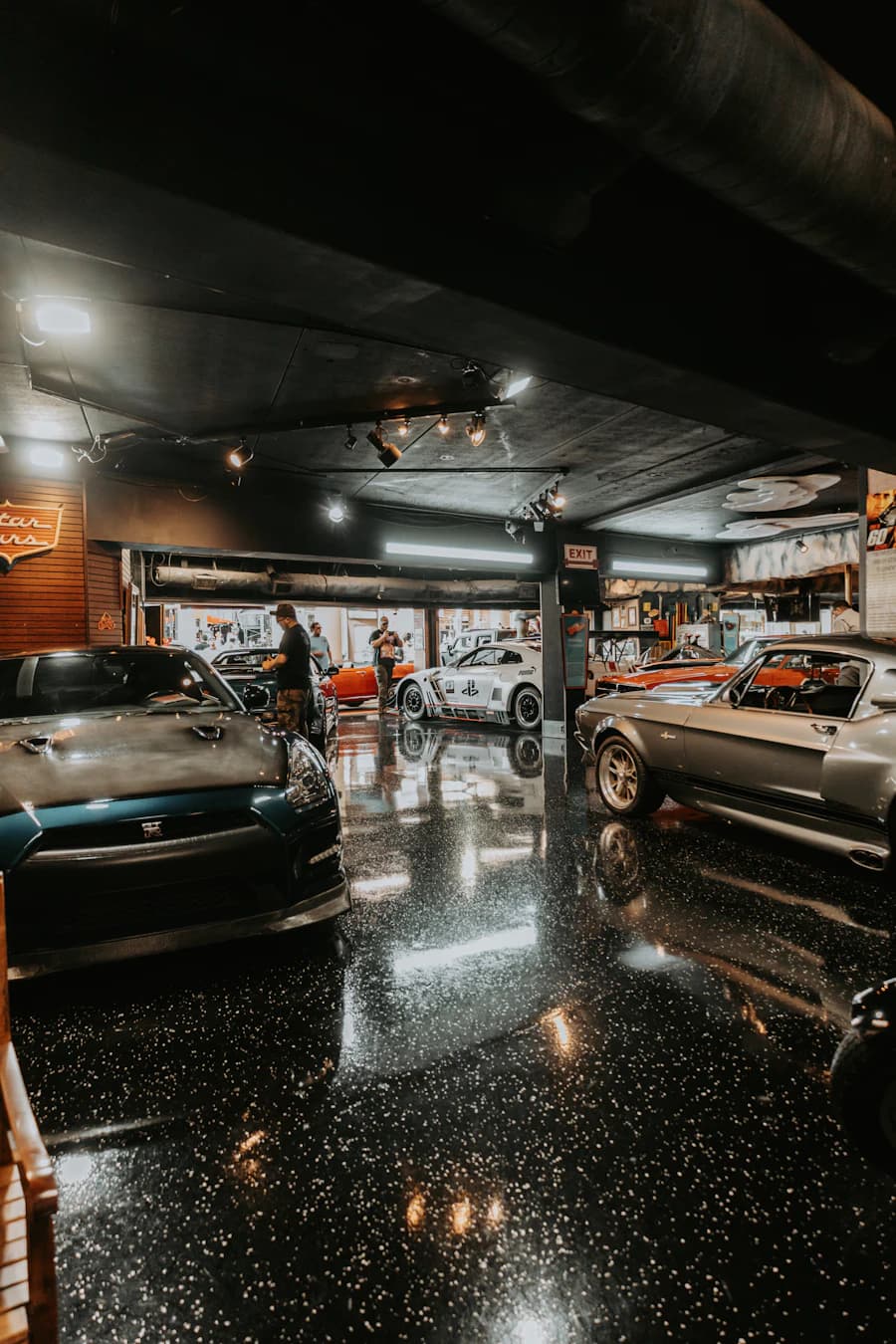
Decorative flake broadcast into the coating does two jobs at once. It hides everyday dirt, dust, and tire marks far better than a solid color, which matters in a space that gets used and gets dirty. It also adds texture underfoot, which matters when you're walking across a wet floor after pulling in from snow or rain. Flake density can run from a light accent scattered across the surface to a full broadcast for more texture and better slip resistance in a working shop or a floor that sees a lot of foot traffic.
For heavier-traffic or dressed-up finishes, take a look at our metallic flake floor options alongside standard flake systems, since the right blend depends on how the space actually gets used day to day. A shop floor that sees oil, tools, and heavy foot traffic benefits from a denser broadcast than a garage that mostly parks two cars and stores a few bikes.
Get a Floor That Actually Handles Colorado Winters
If your garage floor already shows salt stains, pitting, or peeling paint from a past DIY job, that's exactly what a proper coating system is built to fix. Call (303) 988-2558 or get a free on-site estimate and we'll look at your slab's current condition and walk you through the right system for how you actually use the space, not just whatever's easiest to sell. We'll also give you a straight timeline for prep, cure, and when the garage is back in regular use.