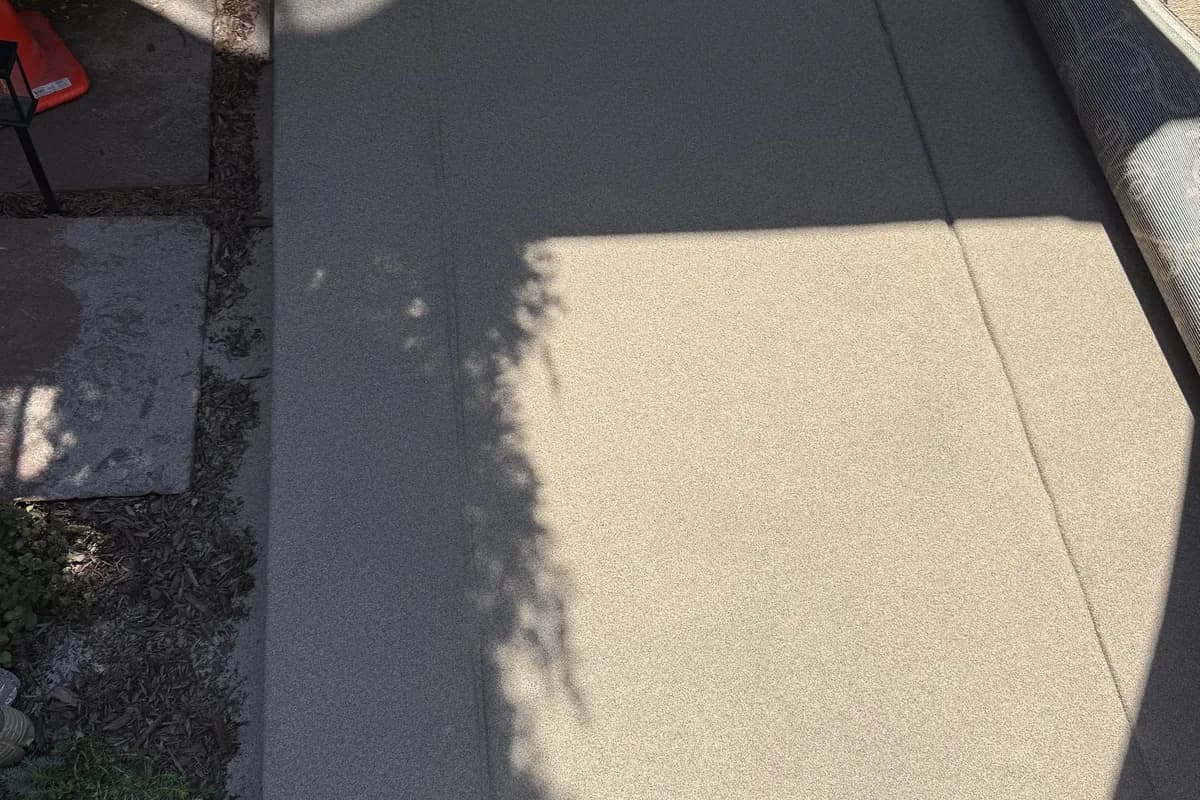
Every concrete slab shows its age eventually, and the question homeowners and facility managers really need answered is whether that means restoration or a full replacement. The honest answer depends on whether the damage is on the surface or underneath, how far it has progressed, and how the soil beneath the slab has been behaving over the years. Getting that diagnosis right up front saves you from paying for a fix that doesn't actually solve the problem.
Surface Damage: Spalling, Scaling, and Hairline Cracks
Spalling is when the top layer of concrete flakes or pops off, usually in scattered patches rather than across the whole slab. In Colorado it's almost always tied to water that got into the concrete, froze, and expanded, made worse by the magnesium chloride in the de-icers used on roads and driveways all winter. Scaling looks similar but shows up as a broader, thinner peeling across the surface rather than isolated chips, and it's often the first sign a slab has been exposed to repeated freeze-thaw cycles without a sealer to protect it.
Hairline cracks that stay narrow and don't shift from season to season are typically shrinkage cracks from the original pour, a normal part of how concrete cures, not a sign the slab is failing. None of these problems mean the concrete underneath has lost its structural strength. They're surface issues, and they can usually be handled with crack and joint repair or a full resurfacing that gives you a new wear layer without tearing anything out.
Structural Problems: Settling, Wide Cracks, and Repeat Offenders
Structural damage is a different category, and it usually starts below the slab rather than on top of it. If a section of concrete is sinking or tilting, that points to a soil problem more than a concrete problem. Denver metro soils run heavy in expansive clay and, in some areas, bentonite, both of which swell noticeably when wet and shrink when dry. Add poor grading or a downspout dumping water next to the slab year after year, and the ground underneath can move enough to crack or drop the concrete sitting on it.
Wide cracks, a crack with one side sitting higher than the other, or a crack that reopens every year no matter how many times it's been patched, all point to ongoing movement below the slab rather than a cosmetic issue. That kind of damage deserves a real inspection before you spend money on a fix that won't hold.
What Restoration Can Actually Solve
When the slab itself is structurally sound and the problem is surface-level or tied to minor soil movement that's since stabilized, restoration options include:
- Crack and joint repair to stop water intrusion before it does more damage underneath
- Mudjacking to lift and relevel a slab that's settled but is still structurally intact
- Grinding to remove surface damage and create a flat, even profile before a new finish goes down
- Resurfacing with an overlay to renew the wear layer and change the look entirely
- Sealing to protect against future freeze-thaw and de-icer damage
Restoration keeps the existing slab in place, which means less demolition, less debris hauled away, and usually a shorter project timeline than a full tear-out and repour.
When Replacement Is the Honest Answer
Some slabs are past the point where restoration makes sense. If the concrete has broken into large sections that move independently of each other, if reinforcing steel is exposed and corroding, or if the soil movement causing the damage hasn't been corrected and keeps recurring year after year, restoration just delays the same problem and costs money along the way. A slab that's badly out of grade for drainage, or one where the base material underneath has washed out from years of poor drainage, usually needs to come out entirely so the base can be rebuilt properly before new concrete goes back in.
The honest answer isn't always the option that sounds less involved. It's whichever one actually holds up given what's happening underneath the slab, not just what's visible on top. A contractor who only offers one type of fix has an incentive to tell you what they sell, which is exactly why this decision deserves an actual inspection rather than a guess from a photo.
Not Sure Which One You're Looking At?
Most people can't tell a cosmetic crack from a structural one just by looking at it, and that's fine, that's what a site visit is for. Call (303) 988-2558 or request a free on-site estimate and we'll walk the slab with you, check how it's draining, and give you a straight answer on restore versus replace before any work starts. You can also see examples of both kinds of work on our recent jobs page.