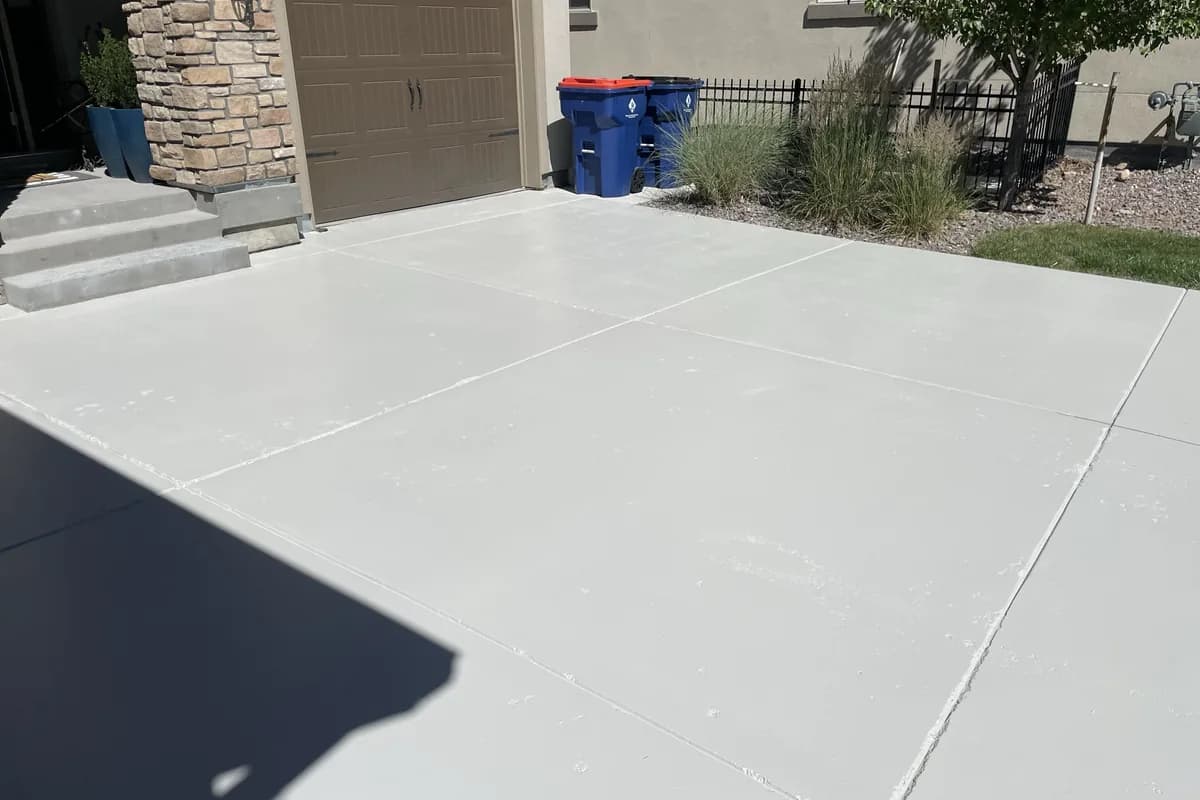
A sunken driveway, walkway or patio slab is one of the most common calls we get, and it usually has a straightforward fix. Before assuming a sunken slab needs to be torn out and repoured, it is worth understanding how mudjacking works and when it is genuinely the right call versus when replacement is the honest answer.
Why Slabs Sink in Colorado
Concrete slabs do not sink because the concrete itself failed, they sink because the ground underneath them moved or washed away. Expansive clay soil common along the Front Range shrinks when it dries out, leaving gaps under the slab. Poor drainage and downspouts aimed at a slab edge saturate the soil and wash fine material out from underneath, the same washout process that follows unsealed cracks and joints. Freeze-thaw cycling adds to both problems over time.
Once there is a void under a section of slab, that section no longer has full support, and it settles under its own weight or under vehicle and foot traffic.
Slabs poured over fill dirt that was not well compacted during construction, and slabs positioned right where a downspout discharges, tend to be the first to show settling. A large, unbroken driveway slab also has more opportunity to find a soft spot somewhere along its length than a smaller walkway section does.
How Mudjacking Works
Mudjacking, also called slab jacking or mud jacking, raises a sunken slab back toward its original grade without removing the existing concrete. A small number of holes, usually one to two inches across, are drilled through the slab in a pattern based on where it has settled. A mud slurry mixture is pumped under pressure through those holes, filling the void underneath and lifting the slab back into place as it fills.
Once the slab is back at grade, the holes are patched with a matching concrete mix. In most cases the surface is ready for normal foot and vehicle traffic the same day, since the slab is not being replaced, just re-supported and releveled.
The slurry itself is typically a mix of soil, sand, cement and water, proportioned to flow through the drilled ports under pressure but set up firm once it is in place. Because it is pumped in stages, the crew can raise the slab gradually and keep checking it against grade rather than overcorrecting in one shot. Ground temperature and moisture affect how well the slurry sets, which is why mudjacking is best scheduled outside of hard freeze conditions when possible.
When Mudjacking Is the Right Call
Mudjacking makes sense when the concrete itself is still in reasonably good condition, structurally sound, without major cracking or crumbling, and the problem is that it has settled or sunk due to a void underneath. This is common on driveways, walkways, patios and pool decks where a section has dropped an inch or two but the surface itself is otherwise solid.
It is also the more economical and faster option in most of those cases, since it avoids demolition, disposal and a full repour. If your slab fits that description, mudjacking and concrete leveling is worth a look before anything more involved.
It also means far less disruption to a driveway or walkway you rely on daily, since there is no curing period the way there is with a fresh pour. You can see examples of settled slabs we have lifted on the job photos page.
When Replacement Is Honestly the Better Call
Mudjacking will not fix a slab with major structural cracking, badly deteriorated concrete, or repeated settling that keeps coming back because the underlying soil or drainage issue was never fixed. It also is not the answer if you want to change the size, shape or thickness of the slab.
In those cases, new concrete replacement or full driveway repair and resurfacing is the more honest recommendation, even though it costs more and takes longer than lifting the existing slab. We would rather tell you that upfront than raise a slab that is going to keep failing.
Surface deterioration like extensive spalling, exposed aggregate from years of de-icer damage, or a slab that is crumbling at the edges are signs the concrete itself will not hold up even after being releveled. Lifting a slab that is already failing on the surface just delays a repour rather than avoiding it.
What to Expect After the Lift
A properly lifted slab should hold its position through normal seasonal ground movement, but if the same drainage or soil issue that caused the original settling is not addressed, that section can settle again over time. That is why we back lifting work with a one-year warranty, and why we will also point out any drainage fix, like redirecting a downspout, that helps the repair hold.
Because settling and cracking often share the same root causes, a lifted slab is also a good time to address any open joints or cracks nearby with crack and joint repair, so the same water intrusion that contributed to the original settling does not start the cycle again.
If a section of your driveway, walkway or patio has settled, we can tell you honestly whether mudjacking or replacement is the right fix. Call (303) 988-2558 or request a free on-site estimate through our contact page.