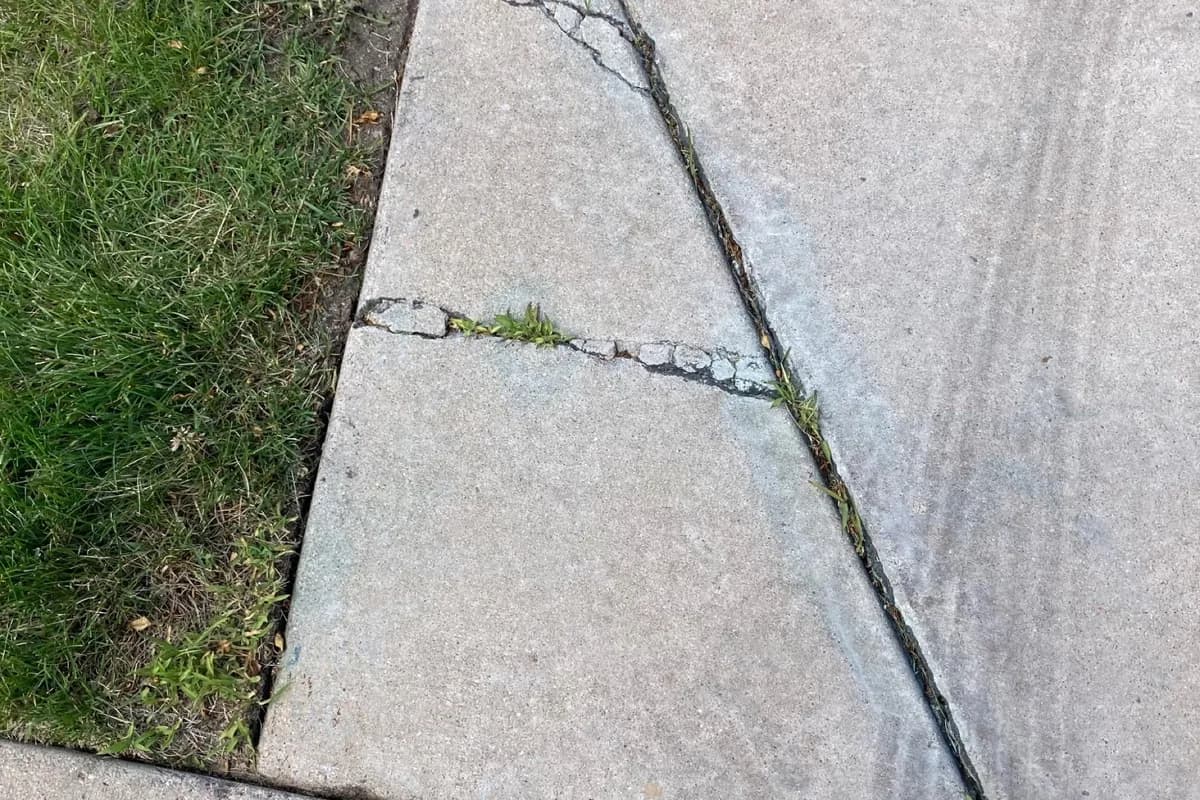
Colorado concrete works harder than concrete almost anywhere else in the country. It is not bad workmanship or bad materials, it is the climate and soil doing what they do every year. Here is what actually breaks down a slab on the Front Range, and what you can do about each cause before it turns into a bigger repair.
Freeze-Thaw Is the Main Driver
Denver and the Front Range can swing 40 degrees in a single day, and that swing happens over and over through the fall, winter and spring. Water gets into small pores and hairline cracks in the concrete, then freezes and expands. That expansion pushes the crack open a little more. The next thaw lets more water in, and the cycle repeats.
Over a season or two, a hairline crack you barely noticed can turn into a crack wide enough to catch a heel or let weeds through. The fix is not to stop the freeze-thaw cycle, that is not possible here. The fix is to keep water out of the concrete in the first place with a good sealer, and to close existing cracks before winter with crack and joint repair.
This is also why a crack that looked stable in October can look noticeably worse by March. Checking exposed concrete each fall, before the first hard freeze, is the easiest way to catch small cracks while they are still cheap to seal.
Expansive Clay and Bentonite Soil Move Under the Slab
A lot of soil along the Front Range and in the Denver metro contains clay and bentonite that swells when it gets wet and shrinks when it dries out. Concrete does not bend, so when the ground underneath it swells unevenly, the slab cracks or one section lifts higher than the section next to it.
This is different from a slab that is simply settling downward. Expansive soil pushes up, unevenly, and it can happen even on a slab that was poured correctly. If you are seeing cracks that line up with uneven or tilted sections, the soil is usually the cause, not the concrete mix.
Bentonite clay in particular shows up in parts of the Denver metro and can swell noticeably with even modest changes in moisture. A patio or walkway close to the foundation, where soil moisture swings more between soaked and bone dry, is more likely to show this kind of movement than a slab further from the house. Keeping soil moisture around the foundation more consistent, rather than letting it swing to extremes, helps reduce how much a slab moves over time.
Poor Drainage and Downspouts Aimed at the Slab
Water that pools against a foundation or slab edge, instead of draining away, saturates the soil right where you do not want it saturated. That saturated soil is more prone to both freeze-thaw heaving and expansive clay movement. A downspout that dumps straight onto a patio or driveway edge is one of the most common causes we see for cracking that keeps coming back after a repair.
Extending downspouts away from the slab and grading soil so it slopes away from the foundation is cheap insurance. It will not fix existing damage, but it stops the next round from happening.
A quick way to check is to look at where water sits about thirty minutes after a hard rain. If it is pooling against a slab edge instead of running off, that is worth fixing regardless of whether cracking has shown up yet.
Magnesium Chloride De-Icers Attack the Surface
Colorado roads and many driveways get treated with magnesium chloride or similar de-icers in the winter. These chemicals are effective at melting ice, but they also penetrate concrete and cause scaling, a flaking or pitting of the top layer of the surface, especially on concrete that is not sealed. Repeated exposure year after year is what turns a smooth driveway surface rough and pitted.
A sealed surface resists this a lot better than bare concrete. If your driveway already shows scaling, concrete resurfacing can restore a smooth surface, and sealing it afterward protects the new surface going forward.
Plain rock salt and sand are gentler on concrete than magnesium chloride, though they are less effective at very low temperatures. If de-icers are unavoidable on your property, rinsing the surface with water after a thaw helps limit how long the chemical sits in contact with the concrete.
High-Altitude Sun Is Hard on Sealers and Coatings, Not the Concrete Itself
Colorado's elevation means more UV exposure than most of the country gets. That UV does not make the concrete itself weaker, concrete's strength comes from its cure, not from sun exposure. What UV does damage is anything applied on top: sealers, coatings and some decorative finishes break down faster here than they would at sea level.
That is why reapplying sealer on a schedule that fits our climate matters more here than in a lot of other states, and why choosing a UV-stable product matters for any coated surface.
Get a Straight Answer on What Is Causing Your Cracking
If your concrete is showing cracks, uneven sections or surface scaling, we can take a look and tell you honestly what is causing it and what it will take to fix. Call (303) 988-2558 or request a free on-site estimate and we will walk the property with you.