Why Cherry Hills Village Driveways and Patios Age Faster Than You'd Expect
The long, exposed driveways that define Cherry Hills Village properties face a combination of stressors that accelerates concrete deterioration in ways that aren't immediately obvious. High-altitude sunlight at the Front Range elevation delivers UV intensity well above what lower-elevation cities experience, breaking down the cement paste at the surface over time and leaving a chalky, porous layer that absorbs moisture readily. Once water enters that porous surface and temperatures drop, freeze-thaw cycling does its work: water expands as it freezes, widening micro-cracks into visible fractures and popping aggregate loose from the surface matrix.
The bentonite and expansive clay soils common throughout Arapahoe County add a second mechanism of damage — subsurface movement that cracks slabs from below rather than from the surface down. A driveway or patio that looks fine one spring may show new cracks the following fall simply because the clay beneath it swelled during summer monsoon rains and then contracted again. This kind of heaving and settling is not a sign of poor original construction; it is a natural consequence of building on the soils this part of Colorado is built on. Proper joint spacing, flexible crack repair products, and penetrating sealers can all slow the cycle significantly.
Repair-First: What It Means for Cherry Hills Village Homeowners
Concrete Doctor was founded on a straightforward premise: most concrete doesn't need to be torn out and replaced — it needs to be properly repaired. That philosophy matters especially in a community like Cherry Hills Village, where driveways, pool decks, and motor court surfaces represent significant investments in curb appeal and property value. A full driveway replacement in this area can run tens of thousands of dollars when you account for the size of the slabs, the decorative finishes, and the landscaping disturbance involved. A professional repair and resurfacing project, done correctly with the right materials, can deliver a fresh, durable result at a fraction of that cost.
Our repair-first approach begins with an honest assessment. When we visit a Cherry Hills Village property, we evaluate whether cracks are structural or cosmetic, whether surface scaling is shallow or has penetrated through the slab, and whether joint deterioration is localized or systemic. That evaluation determines whether the right solution is crack injection and sealing, full resurfacing with a Westcoat overlay system, an epoxy or polyaspartic garage coating, or — when truly warranted — selective panel replacement. We never recommend more than the situation requires, and we explain our findings clearly so homeowners can make confident decisions.
Serving Cherry Hills Village from Our Lakewood Base Since 1994
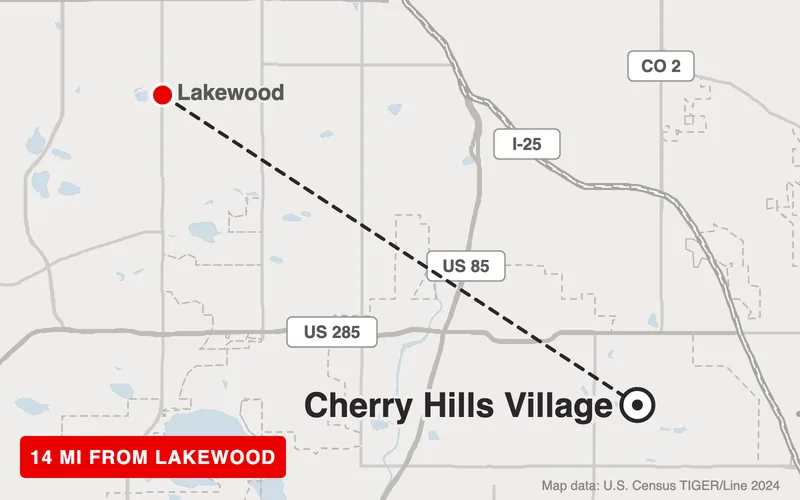
From our Lakewood location, Cherry Hills Village is a straightforward run southeast — about 16 miles that our crews make regularly for estimates, project starts, and follow-up work. Over more than three decades serving the Denver metro, we have built familiarity with the specific soil conditions, property types, and seasonal timing considerations that define concrete work in Arapahoe County communities like this one. We know that spring is the best time to address heave damage before summer UV starts working on freshly exposed surfaces, and we know which Westcoat coating systems hold up best against the magnesium-chloride exposure that affects driveways near well-traveled streets.
If you have cracked, spalled, or stained concrete on your Cherry Hills Village property — or if you are ready to transform a plain garage floor into a finished, protective coating — reach out to our team at (303) 988-2558 for a free on-site estimate. We will walk the property with you, give you a straight assessment, and outline your options without pressure.